
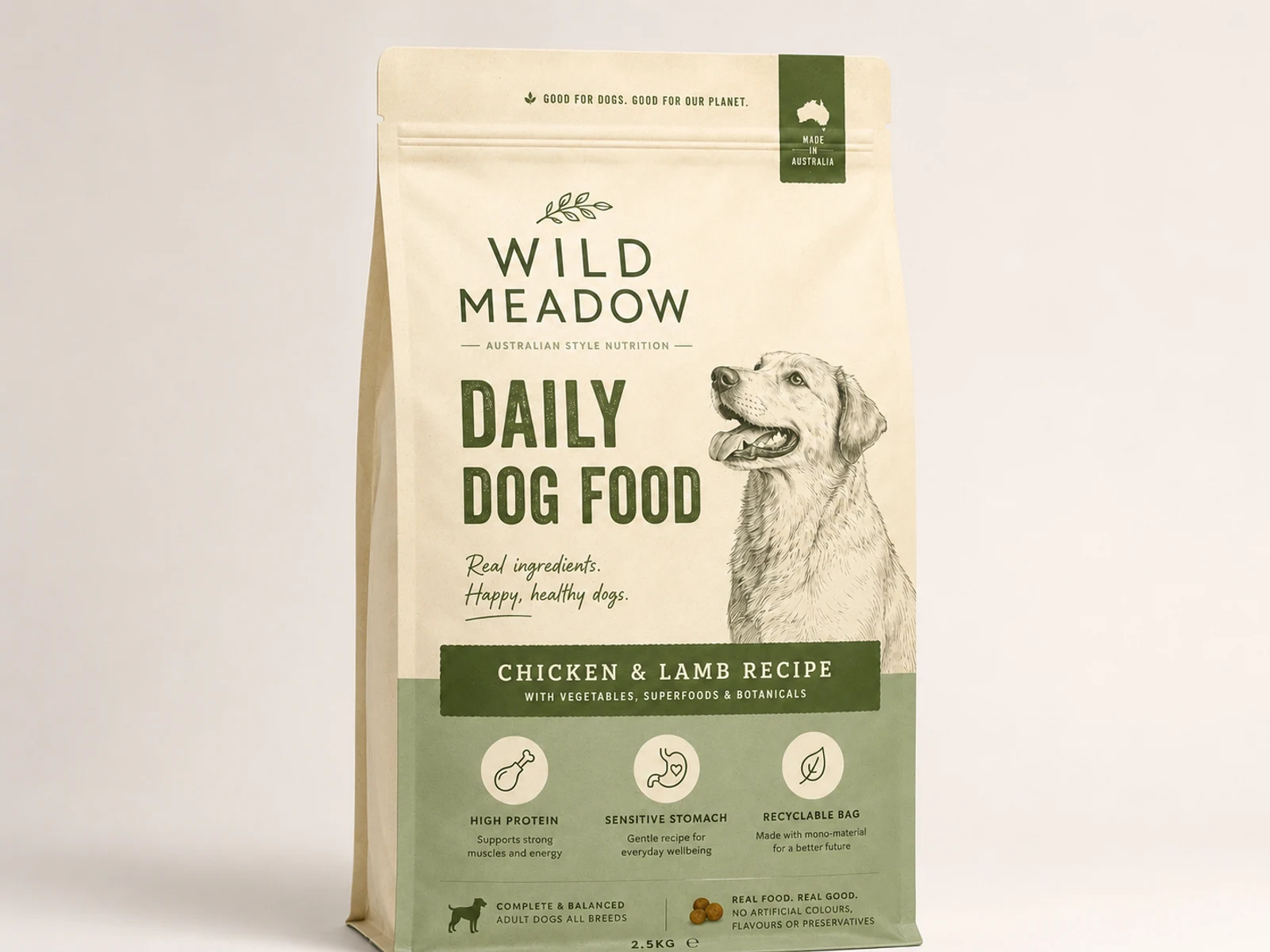
Pet Food Packaging
Pet Food Packaging That Protects Freshness After Opening
Solve odor loss, zipper failure, bag puncture, and poor shelf stability when developing custom pet food packaging for kibble, treats, or supplements.

Pet Food Packaging
Solve odor loss, zipper failure, bag puncture, and poor shelf stability when developing custom pet food packaging for kibble, treats, or supplements.

Pet food packaging still has work to do after the customer breaks the top seal. Aroma, fat oxidation, humidity, repeated zipper use, and storage near sharp kibble edges can expose weak materials and closures.
Define the expected consumption period after opening, not only the unopened shelf life. This helps select barrier, zipper strength, and bag structure around actual use.
Large bags carry more stress at the bottom seals and during transport. Small treat packs may need a hang hole and easy opening. Both should be tested with the real product because kibble shape, oil, and fill weight affect performance.
The EU PPWR generally applies from 12 August 2026 and brings packaging design, composition, and waste prevention into sharper focus. Material reduction or mono-material development may be useful directions, but the final claim must match the exact structure and local collection system.
The FDA has also examined PFAS in animal food packaging. Buyers should specify the destination market and ask for relevant food-contact documentation rather than relying on a generic safe or eco label.